Research
Elucidating How the p53-Inducible Phosphatase PPM1D Regulates Immune Function and Cell Differentiation
~ Toward the Development of New Therapies for Cancer, Inflammatory Diseases, and Metabolic Disorders ~
Our laboratory seeks to elucidate the molecular mechanisms that regulate cell differentiation, immune responses, and cancer cell behavior, with the ultimate goal of developing new therapies for cancer, inflammatory diseases, metabolic disorders, and bone diseases. In particular, we focus on the p53-inducible phosphatase PPM1D and investigate its roles in the differentiation and function of immune cells, especially neutrophils, in immune responses within the tumor microenvironment, and in the differentiation of adipocytes and osteoclasts.
Regulation of Neutrophil Differentiation and Innate Immunity by PPM1D
Neutrophils are the most abundant type of leukocyte and play a central role in host defense and inflammatory responses. Recent studies have revealed that neutrophils comprise diverse subpopulations that differ in their functions and timing of appearance. Tumor-associated neutrophils, which accumulate within tumor tissues, have attracted particular attention because of their potential roles in tumor progression and immune suppression.
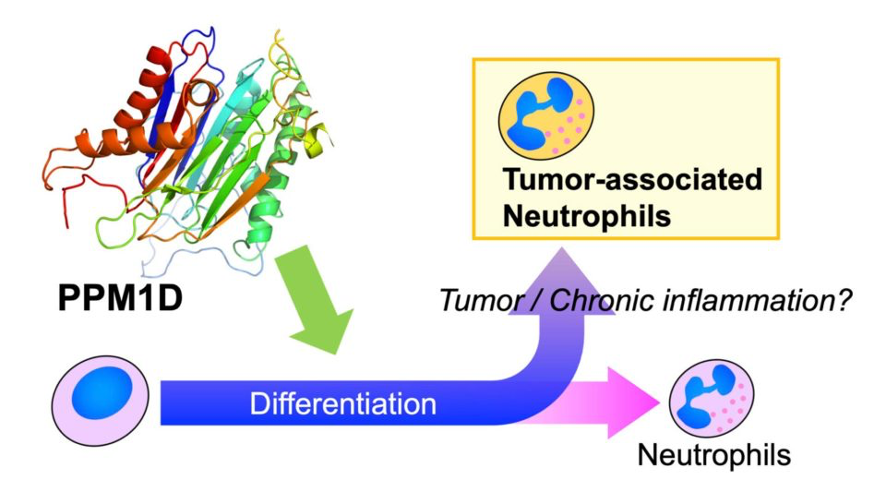
Our laboratory aims to determine how the p53-inducible phosphatase PPM1D regulates neutrophil differentiation and function, as well as immune responses within the tumor microenvironment. Elucidating the mechanisms by which PPM1D controls innate immunity may lead to the development of new therapeutic strategies for cancer and chronic inflammatory diseases.
Elucidating the Diverse Molecular Functions of PPM1D
PPM1D is a Ser/Thr phosphatase involved in the regulation of DNA damage responses, cell proliferation, and immune responses. PPM1D overexpression and mutations have been reported in leukemia and myelodysplastic syndromes, highlighting its potential importance in cancer and immune-related diseases.
Our previous studies identified a C-terminal splice variant of PPM1D, designated PPM1D430, that is preferentially expressed in leukocytes and the testis. We are investigating differences in the subcellular localization and function of PPM1D and PPM1D430 to clarify their respective roles in immune cells and cancer cells.
We are also investigating the function of PPM1D in glioblastoma, an aggressive malignant brain tumor. Our goal is to determine how PPM1D contributes to cancer cell proliferation, survival, and treatment resistance and to identify new therapeutic targets.
Regulation of Cell Differentiation and Tissue Homeostasis by PPM1D
PPM1D is thought to be involved not only in immune responses but also in the differentiation of various cell types and the maintenance of tissue homeostasis. In addition to studying its role in immune-cell differentiation, particularly neutrophil differentiation, our laboratory is investigating the functions of PPM1D in adipocytes and osteoclasts.
Adipocytes include white adipocytes, which store energy; brown adipocytes, which generate heat; and beige adipocytes, which share characteristics of both white and brown adipocytes. Because excessive differentiation and hypertrophy of white adipocytes are associated with obesity and metabolic disorders, elucidating the mechanisms that regulate these processes is an important research objective.
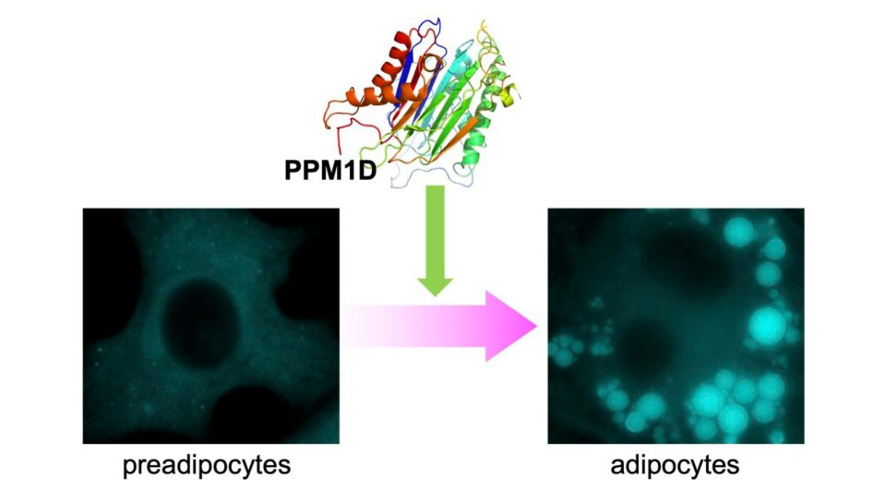
Our laboratory has found that PPM1D regulates white adipocyte differentiation, and we are investigating its roles in lipid droplet formation and adipocyte function. We are also examining the involvement of PPM1D in the conversion of white adipocytes into beige adipocytes.
Osteoclasts are responsible for bone resorption and play important roles in bone metabolism and inflammatory diseases. We are therefore also investigating how PPM1D regulates osteoclast differentiation and function. Through these studies, we aim to determine whether PPM1D serves as a molecular link among immunity, metabolism, and bone homeostasis.
~ Our Research Goals ~
Through these studies, we aim to elucidate the mechanisms by which PPM1D regulates cell differentiation, immune responses, cancer cell behavior, and metabolism and to translate these findings into new therapies for cancer, inflammatory diseases, obesity and metabolic disorders, and bone diseases.
By investigating diverse cell types—including immune cells, cancer cells, adipocytes, and osteoclasts—from the perspective of PPM1D biology, we seek to identify common principles underlying disease-associated cellular responses and to discover new therapeutic targets.